Source Carbon Fiber Electric Efoil for Water Sports
Compare 14 carbon fiber electric efoil models from Chinese manufacturers. Buyers can evaluate specs like speed, weight, and battery life for surfing, travel, and water activities to find the best fit for their needs; compare the available evidence and request quotations based on your requirements.
Key considerations
Products List


Comprehensive Sourcing Guide
Carbon Fiber Electric Efoil Sourcing Guide
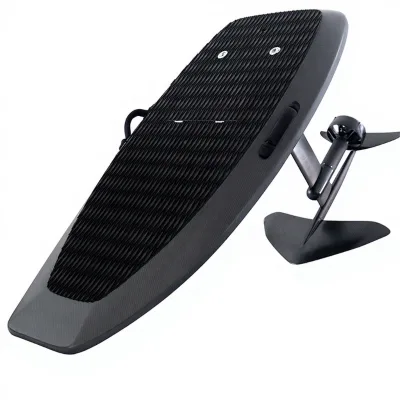
The carbon fiber electric efoil market presents a specialized segment where high-performance materials meet advanced propulsion systems for water sports. Buyers must distinguish between standard inflatable boards and rigid composite constructions that offer superior rigidity and speed. The observed product listings indicate a focus on adult unisex applications suitable for whole-year usage, with specific models like the YH-EF01 and YH-EF02 featuring distinct dimensions and power outputs. Understanding these variations is critical for aligning procurement with specific operational needs, whether for recreational surfing or professional training.
Sourcing decisions should prioritize the integration of carbon fiber components to ensure optimal weight-to-power ratios. The available data highlights materials such as ABS, EPP, and carbon fiber, which directly influence the board's durability and top speed capabilities ranging from 40km/H to over 55km/H. Procurement teams must verify that the specific model selected matches the intended water conditions, as some units are optimized for micro-wave waters while others support broader applications. This alignment ensures the equipment delivers the expected performance without compromising safety or structural integrity during operation.
Product Scope and Observed Listing Signals
Buyers should analyze the observed price range of 1650 to 4000 USD to gauge market positioning and value propositions. This variance often reflects differences in motor power, battery capacity, and the extent of customization options available. Listings indicate that customization is available for colors and potentially other features, allowing buyers to tailor products to brand identity or specific user preferences. However, the wide price spread necessitates a careful review of included accessories, such as fins, backpacks, paddles, and hand pumps, to ensure the total package meets operational requirements.
The product scope extends beyond the board itself to include comprehensive packing solutions designed for safe international transport. Observed packaging details reveal a mix of plywooden boxes, carton boxes with foams, and specific dimensions like 227.0 cm by 83.0 cm by 23.0 cm. These packing specifications are vital for logistics planning and cost estimation, as they affect shipping volume and potential damage risks. Buyers must confirm whether the listed dimensions apply to the specific model they intend to purchase, as variations in standard sizes like 16872cm or 21072cm can significantly alter shipping calculations and storage requirements.
Technical Specifications to Verify
Verification of power and speed specifications is paramount when selecting an electric efoil for commercial or serious recreational use. The data shows power ratings ranging from 4.5kw to 12kw, with top speeds varying between 40km/H and 55km/H. Buyers must cross-reference these figures with the specific model number, such as the Explorer or Challenger series, to ensure the propulsion system matches the desired performance envelope. Additionally, working times of approximately 60 minutes and maximum load weights up to 120kg are critical metrics that determine the board's suitability for different user demographics and session durations.
Dimensional and weight specifications require precise validation to ensure compatibility with transport and storage constraints. Observed weights range from 25kg to 42kg, with standard sizes including 21070cm and 16870cm configurations. The volume of the board, noted as 89L or 105L in some listings, directly impacts buoyancy and stability, which are essential for user safety. Procurement teams should request detailed technical sheets for each model to confirm the exact standard dimensions, such as 1740mm*695mm or 184x66.5x21.5CM, ensuring the physical footprint aligns with the intended application environment.
Compliance and Safety Documentation
Safety compliance is a non-negotiable aspect of sourcing electric water sports equipment, particularly given the high speeds and powerful motors involved. Buyers must insist on seeing valid certification documents, such as CE marks, which indicate adherence to European safety standards for electrical and mechanical components. The presence of certifications like "CE etc" in the data suggests that suppliers may offer various compliance levels, but the specific scope of these certifications must be verified against the destination market's regulatory requirements. Without proper documentation, the risk of liability and operational bans increases significantly.
Beyond general certifications, specific safety features like anti-friction properties and sunscreen capabilities should be documented and verified. These attributes contribute to user comfort and protection during extended use, which is a key selling point for high-end efoils. Buyers should request test reports or material safety data sheets that confirm the effectiveness of these features, ensuring they are not merely marketing claims. Additionally, the inclusion of standard accessories like hand pumps and paddles should be checked against safety guidelines to ensure they meet the necessary quality and durability standards for emergency situations.
Cost Drivers and Commercial Terms
Understanding the cost drivers behind the observed price range of 1650 to 4000 USD is essential for effective budget management. The primary factors influencing cost include the use of carbon fiber materials, the power output of the motor, and the complexity of the battery management system. Higher power ratings and advanced materials naturally increase the unit cost, but they also deliver superior performance and longevity. Buyers should analyze the total cost of ownership, considering that higher initial investment often correlates with reduced maintenance costs and longer operational lifespans.
Commercial terms such as Minimum Order Quantity (MOQ) and customization availability play a significant role in the procurement strategy. The observed MOQ range of 1 to 2 units suggests flexibility for smaller buyers, while customization options allow for brand differentiation. However, buyers must clarify whether customization incurs additional costs or affects lead times. It is also crucial to negotiate clear terms regarding packaging, as the use of plywooden or carton boxes with specific dimensions can impact shipping costs. Clear agreements on these terms prevent unexpected expenses and ensure a smooth supply chain process.
Supplier Qualification and Quality Control
Supplier qualification requires a rigorous assessment of their manufacturing capabilities and quality control processes. Given the origin of products in Anhui, China, buyers should verify the supplier's experience with carbon fiber composites and electric propulsion systems. The presence of multiple model numbers like YH-EF01/02/03 indicates a range of production capabilities, but buyers must ensure the supplier has a consistent track record of delivering high-quality units. Requesting references or case studies from previous clients can provide insight into the supplier's reliability and ability to meet specific technical requirements.
Quality control measures must be established to ensure every unit meets the specified standards and performance metrics. Buyers should implement a pre-shipment inspection protocol that checks critical attributes such as weight, dimensions, and power output. The variation in observed weights and sizes across different models highlights the need for strict adherence to specifications during production. Additionally, verifying the packing process is essential to prevent damage during transit, as the complex nature of efoils makes them susceptible to impact. Establishing a clear quality assurance framework with the supplier ensures that only compliant products reach the market.
Long-Term Procurement Checks
Long-term procurement success depends on establishing a robust relationship with suppliers that supports ongoing maintenance and support. Buyers should negotiate service level agreements that cover warranty periods, spare parts availability, and technical support for troubleshooting. The complexity of electric efoils means that issues may arise after the initial purchase, making a reliable support channel essential for minimizing downtime. Ensuring that the supplier can provide replacement parts for critical components like motors, batteries, and propellers is a key factor in maintaining operational continuity.
Continuous monitoring of product performance and market trends is necessary to adapt procurement strategies over time. Buyers should track the performance of the efoils in real-world conditions to identify any recurring issues or areas for improvement. This feedback loop can inform future purchasing decisions and help in negotiating better terms with suppliers. Additionally, staying informed about emerging standards and technologies in the electric water sports sector ensures that the procurement strategy remains competitive and aligned with industry advancements. Regular reviews of supplier performance and product quality will help maintain a high standard of operations.
FAQs
What materials are used in carbon fiber electric efoil construction?
The boards are constructed using a combination of ABS, EPP, and carbon fiber. This material mix provides the necessary structural rigidity for high-speed water sports while maintaining a manageable weight for the electric propulsion system and hydrofoil components.
What is the maximum speed of these electric hydrofoil surfboards?
The maximum speed varies by model, ranging from 40 km/h to 55 km/h. Specific configurations like the Explorer JET reach 40 km/h, while higher-power models with 10kw or 12kw systems can achieve speeds between 52 and 55 km/h under optimal conditions.
How long does the battery last during a single session?
The standard working time is approximately 60 minutes per charge. This duration allows for a full session of water sport activity, though actual runtime may vary depending on the rider's weight, water conditions, and the specific power settings used during operation.
What accessories are included in the standard package?
The standard accessories include fins, a backpack, a paddle, and a hand pump. These items are essential for setup and transport, ensuring the rider has all necessary components to prepare the board for use in micro wave waters or other suitable environments.
Can the color of the electric efoil be customized?
Yes, customized colors are available for these electric hydrofoil surfboards. Buyers can request specific color schemes to match their branding or personal preferences, allowing for a tailored appearance that distinguishes the board from standard production models.
What is the maximum load weight for the efoil?
The maximum load weight is 120kg. This capacity ensures the board can support a wide range of adult riders while maintaining stability and performance. Exceeding this limit may affect the hydrofoil's lift and the electric motor's efficiency.
What certifications are available for these electric surfboards?
The products carry CE certification and other relevant standards. These certifications indicate compliance with international safety and quality requirements, providing assurance for buyers regarding the electrical components and overall structural integrity of the electric hydrofoil system.